 Basket: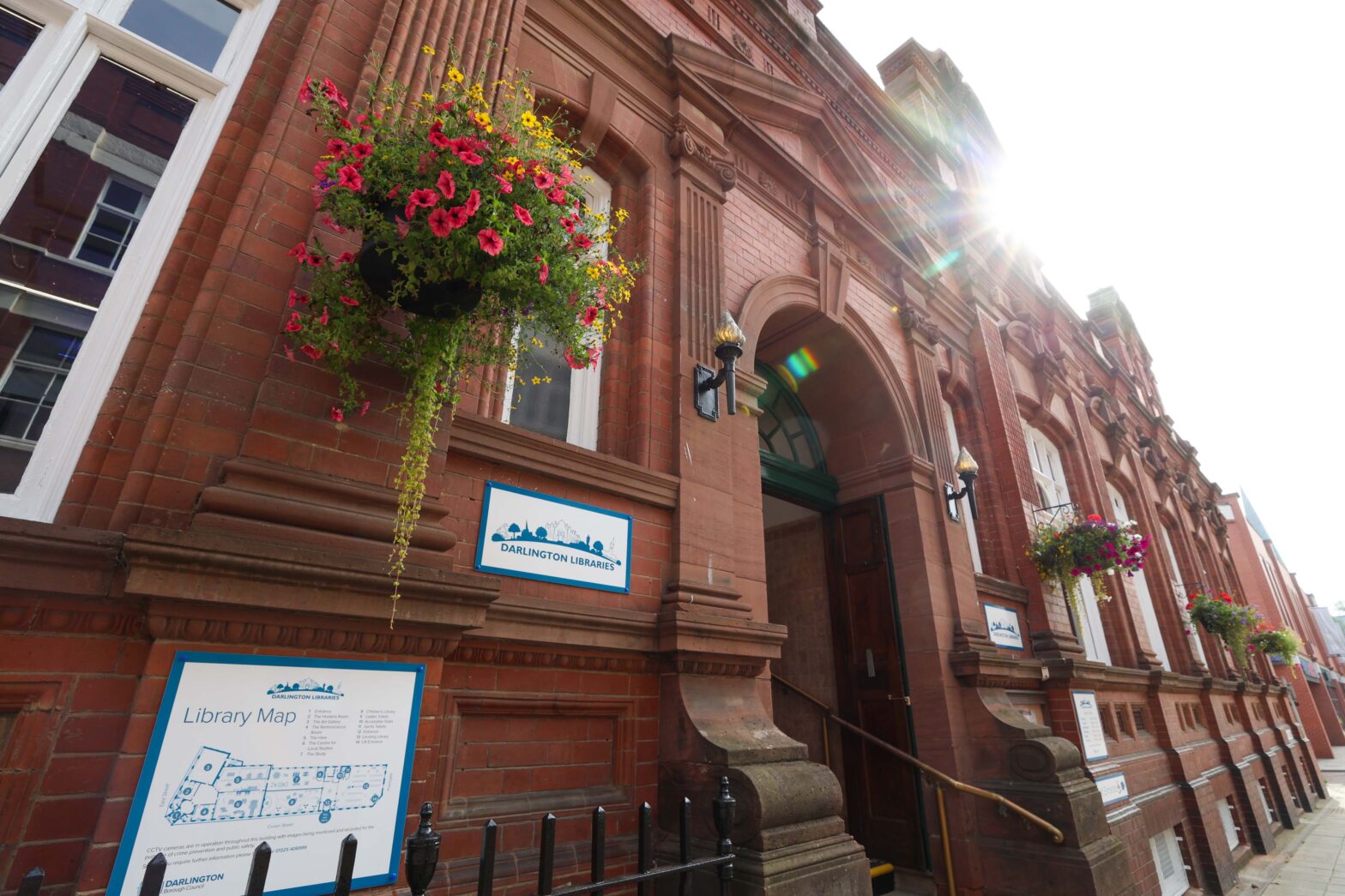
We tell ourselves stories in order to live. I have been thinking about this since last week, since I stood in Darlington Library on a research visit, and picked up a baby names book.
Baby Names 2023. Over 8,000 names. I opened it at the Ts. Thabo, Swahili, meaning filled with happiness. Thelonious, Latin, meaning ruler of the people. Theophile, meaning God’s love. I stood there for a while, not reading exactly, more like listening. Because I have done this before. Years ago, in a library, I found my child’s name in a book like this one. A few lines. An etymology. A meaning. That was all. It was enough. It was, in the most precise sense of the word, everything.
This is what I have come to understand about reading. It does not always announce itself. It does not always look the way we have been taught to expect.
The gallery at Darlington Library has a vaulted ceiling and a particular quality of light. Industrial paintings on one wall. On another, quieter things, a watercolour of a mill, a woman in blue resting beneath a tree beside still water. She might be reading. She might be sleeping. The distinction, it occurs to me, is not always important. There is a visitor book in the gallery. A spiral-bound notebook. People have been writing in it since February. Captures the essence of a beautiful town over many years. Are there more Darlington treasures to present to the public? It is an important part of our heritage. Two young artists named Maddy and Cleo drew a cat and a mouse and wrote: as young artists ourselves, it’s lovely to see what we could learn to achieve. There is a small smiley face at the end of this entry. I found it, unexpectedly, affecting. People reach for reading and writing when something moves them. I think we forget this. We think of it as a formal act, a skilled act, something that happens with intent. But the visitor book suggests otherwise. The visitor book suggests that the impulse is older than that, and more ordinary, and more necessary.
The library building has rooms with histories. The original lending library is now the Hive, digital technology, maker equipment, the bright materials of futures being built. The old newspaper and reading room is now the Centre for Local Studies, dedicated to local and family history, described on a plaque near the entrance as a window into the past. The Ladies Reading Room has become a Reminiscence Room, its original fireplace preserved. It is hoped, the plaque says, that the space will inspire nostalgic conversations about days gone by. I stood in front of that plaque for some time. The idea that a room can hold memory. That a fireplace can be an anchor. That a library is, among other things, a technology for keeping the past accessible to the present. This is not a small thing.
On the shelves: a section sign reading OTHER PEOPLE’S LIVES. Another: LOVE IS ALL AROUND. A Shakespeare meme, his portrait, the words I think I’ll make a love story. Everybody dies, beside a chain of paper rings made from book pages. The library had put this there deliberately. The canon made human. Made funny. Made available.
This is what I am here to think about. What it means to make reading available. Not reading as institution, not reading as self-improvement, not reading as the thing you were made to do at school and have felt vaguely guilty about neglecting ever since. Reading as the moment in the baby names book when the right word appears and something in you settles. Reading as the visitor book entry you write because you saw a painting of your town and it made you feel, briefly, seen.
Before I left, I went to the shelves properly. Not browsing, not scanning, looking. This is what I have come to think of as the real work of a Reader in Residence: not to arrive with a list, but to pay attention to what stops you. What stopped me were two books by Ali Smith. Public Library and Other Stories, and Gliff. I withdrew them both. The covers meant something to me in that moment in a way I couldn’t immediately articulate, which is usually a sign that something is right. This is, I think, exactly what a library is for. The hidden gem is not always the rare or the archival or the locally significant, though it can be all of those things. Sometimes it is simply the book that finds you on an ordinary afternoon when you weren’t entirely sure what you were looking for. In the sessions I’m planning, this is where I want to begin, with that experience of being stopped. With the question of what it means to walk into a room full of other people’s words and find, somewhere among them, something that feels like yours.